


Much like sustainability became central to every brand’s marketing strategy in late 2010s, inclusivity became the buzzword in 2020 three years after Fenty Beauty launched with 40 foundation shades and subsequently exposed gaping disparities in beauty products.
While early adopters prove the value of these concepts by taking the risk to do things differently—and often better—, others rush to capitalize on the movement. The once-meaningful ideas often devolve into marketing jargon and empty campaigns designed merely to profit from the appearance of change. And, this year, anything from a comment section or email list to a big brand activation has been labeled “community.”
Yet, every brand attempting to create buzz is building community, and even some organic communities have morphed into brands, like Los Angeles’ nature community Usal Project or Hike Clerb the 501(c)(3) outdoor collective and non-profit organization whose founder Evelynn Escobar just launched a sneaker with Saucony.
But, why?
A variety of sociological factors have necessitated the desire and demand for community. A survey released in September found significant, double-digit declines in Americans’ participation in key social activities from 1995 to 2026. Young Americans today are spending significantly more time alone than they were 20 years ago, and it’s even reflected in how many words we say aloud in a day.
Further, as we create more apps and technology for convenience such as Uber, self-checkout and even meal delivery services, more mundane daily tasks have turned into less engagement with other humans. While they’re touted as frictionless, the reality is it cuts into opportunities to connect with others.
Constantly parroted on social media, we see “inconvenience is the price you pay for community.” With friction, connectivity and opportunities for growth or evolution with others, community is fortified. By definition, it’s a group of people connected by shared traits, goals, or a common place, characterized by mutual concern, social ties, and a sense of belonging
And, brands are copy-pasting the big brand activation formula in the name of community even when it doesn’t fit the product. (Side-eye at that “OpenAI Summer Camp” catastrophe.) With years and years of highly curated events with influencers under their belts, others are shifting to more organic events. Rather than hiring content creators with clear objectives and deliverables, they’re bringing that brand activation magic directly to their consumers. Free from the outcome of sales and brand reach, community can be the main objective. Year of Ours is one of them.
Founder and CEO Eleanor Haycock started Tennis Club in 2021 and Hike Club last May. As community has become a hot commodity, she shares her thoughts.
-
Rae Witte: Why do you think brands are putting effort towards hosting IRL community events? What’s the benefit?
Eleanor Haycock: “I realized that there is a strong benefit, and it’s not just for business. It’s really about the conversations and the people you meet. You get to hear a lot of new perspectives. Every time we do Hike Club, I meet so many people from LA that I’ve never met. It’s definitely a benefit as a founder as well as for everyone that comes.
Sometimes people will come and it’s an opportunity to see friends you already know or have met attending. Our Tennis Club is like that. Either way, it creates this chance to meet new people and share an experience with them. I meet people every time we host a Tennis Club or Hike Club, and I really like that.”
RW: When and why did you first shift from doing less influencer focused events to more open community events?
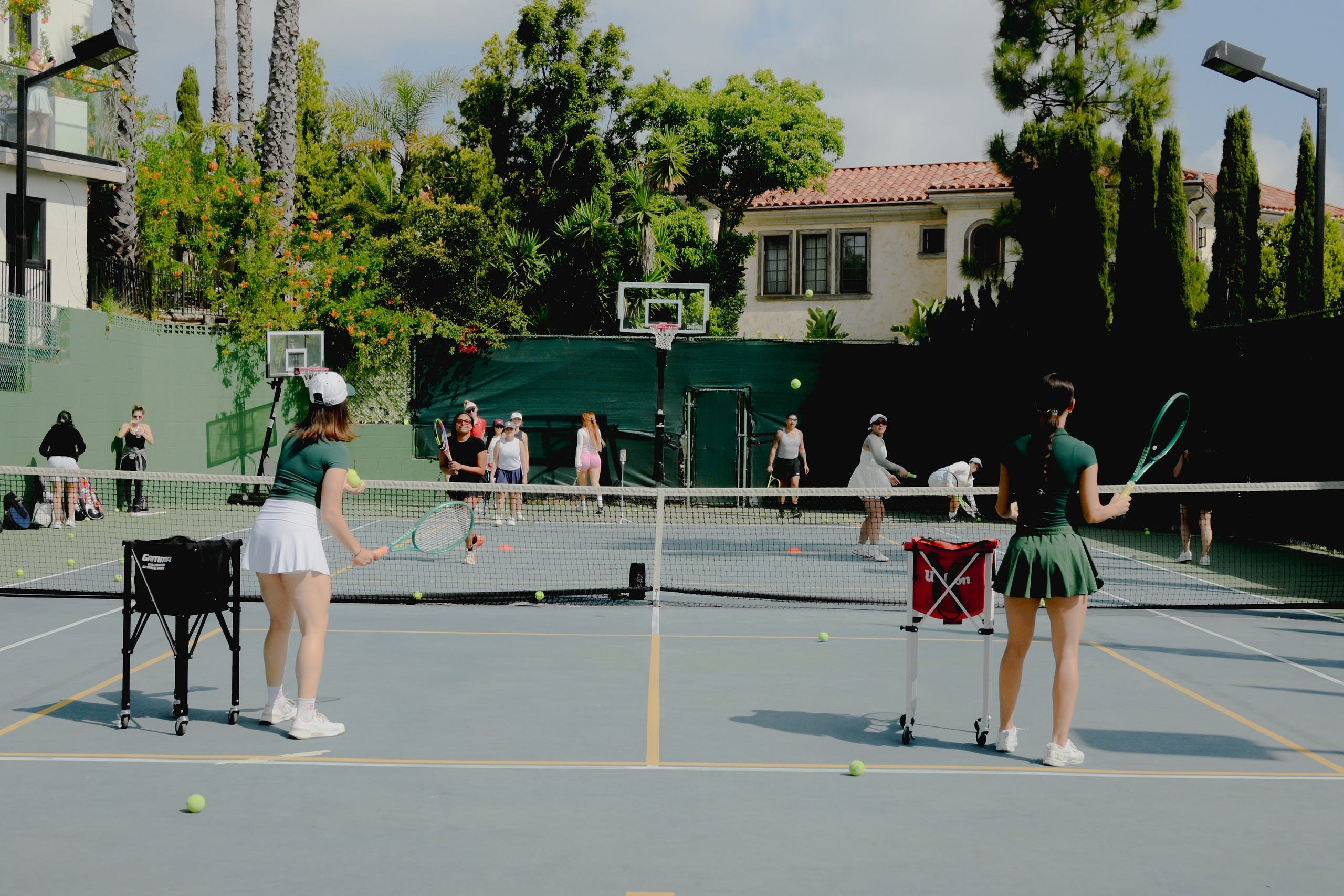
EH: “We started Tennis Club in 2021. We have done other one off community things prior to that too, but lately I don’t want to do any influencer events. If I was to do a curated dinner, it’d probably be with people that I find interesting, not people based on their following or personal brand.
We launched around the same time influencers started becoming worthwhile for branding and marketing. We were partnering with influencers for workouts at a time when few brands beyond Alo and Free People were doing the same.
My lack of desire for them comes from the exhaustion of it. It’s not really about metrics because an influencer event is still going to have good measurable metrics online. You’ll still create visibility, but I just don’t think it’s aligned with our brand currently. I’m not sure if it ever really did.”
RW: What are some strategies you’ve observed that are being done in the name of community but are not that at all?
EH: “It’s really weird because you have brands like J. Crew who sent everyone out to a remote part of New York this past summer, and they did a summer camp with them. I think it was mostly editors and writers, maybe models or content creators. And, I remember thinking that it looked so good on film and as an ad. I’m sure people truly connected there as well. But, I’m always curious: is this just a grab for advertisement?
I think there are a lot of brands that do that. They do these retreats, dinners out in Santa Barbara, usher people out to the US Open or whatever else. It’s supposed to represent this community, but I think it’s actually just for them to get metrics online and good photos of beautiful people in their clothing or with their product.
That’s where I question things. I think they’re trying to create this aspirational view of community, but at the same time, how authentic is it? It’s not really for the customer. If you’re a customer, you’re not going on that retreat. It’s someone of a certain status or job and they probably look a certain way to be able to be on that retreat.
I think run clubs are still the number one example of a driver of community between what they’ve done, how people do it, and how consistent they are. You see these run brands that were barely known two or three years ago, and now they’re massive because they’ve built these cultures of people gathering, running together and investing in this activity together. It’s far less curated.
Also, I also have this annoyance lately with brands that do big pop-ups and call it community. The customer goes because they are selling them product. They don’t throw free events for you to go, bring people together and have an experience. These are cool brands, and I love some of their creative. At the end of the day, it’s a sale. You’re asking people to come wait in line for hours and shop. It’s capitalizing on a customer who feels the dire need to buy something because you’re gonna be out of stock of it otherwise, and they won’t look like all their friends.”
RW: It’s just the hype model that’s been leveraged in sneakers and beauty. Now, it’s made its way into activewear. It’s about supply and demand, not community.
EH: “The demographic clearly loves it, and I see the function of it. But, there is a difference between a community event and a pop-up. We don’t even have product available at our Hike or Tennis Club because it’s about connecting through the shared experience.”
RW: Are there any brands doing it right? Or, have you seen event series you think are an excellent example of community building by a brand?
EH: “Bandit has done it really well, and Minted New York is interesting to me. I feel like I see a new running brand everyday and they’re doing community events whether its group runs or cheer sections on race days. Represent 247, too. They’re London based.
I like what Cadence, the drink company, is doing both on their own and with their partnerships. It seems really accessible and free, and that’s really cool.
There are also communities that have grown beyond simply events. I love Gorp Girls. They’ve expanded from outdoor community to offering their services as an agency. Half Days is really impressive too. They’re a women-led outdoor community that also sells women’s outdoor and ski apparel.
We’ve tried to build that with Hike Club. In the past, we had a ticket fee for Tennis Club but we’re shifting to do it in a public place and accommodate more people for free. The tickets were simply because we had a limited amount of space. However, we had our free Tennis Club meet up at Echo Park Rising, which was like a hit! It became really clear that this was the way to do it. It felt so much better.
Beyond Yoga is doing workouts right now and it’s $50 for customers to come work out in their studio. It shocks me. It seems to be becoming more common now.”
RW: What did community-building look like for Year of Ours in the beginning? What were the intentions?
EH: “In the beginning it was a lot of our friends that would come, and we would host a SoulCycle workout or partner with a gym. We’d simply invite our friends to come work out with us. That was 2016 and ‘17. At that time people weren’t even really doing content like we do now. Instagram Stories didn’t come out until August 2016.
I remember we would throw something, and no one really knew about the brand. Our friends would come to it, and that was really fun and cool. Not that many people would show up, though. It would only be 10 to 15 people. The intention was really just to throw an event or host a workout.”
RW: Now, with the Tennis Club and Hike Club, how has it changed? What goes into it? And, what does that look like for the brand?
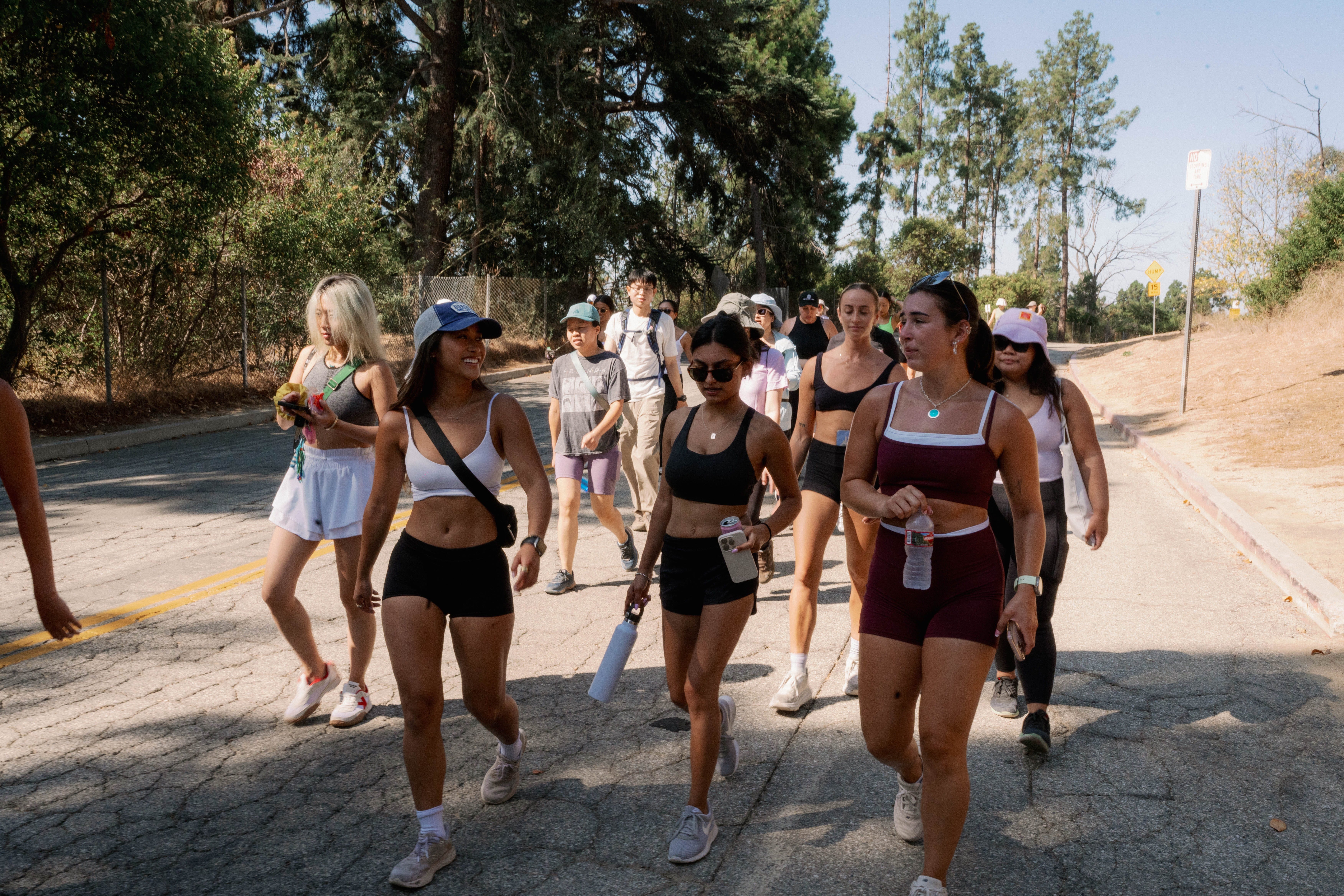
EH: “When we started Hike Club in May, we were going to move to different places in LA. But, we realized that was too difficult logistically. We’re currently in Griffith Park. We meet at the same location every month, but we take different hikes.
Essentially, we share it on our socials. We do email. Event round-up accounts and attendees share TikToks on it, and that’s how people find out about it. So, if they follow us or are on our email list, they can come, or anyone can come as long as they know about it. They just need to RSVP. After they RSVP, they get an email with where to park and where it’s located.
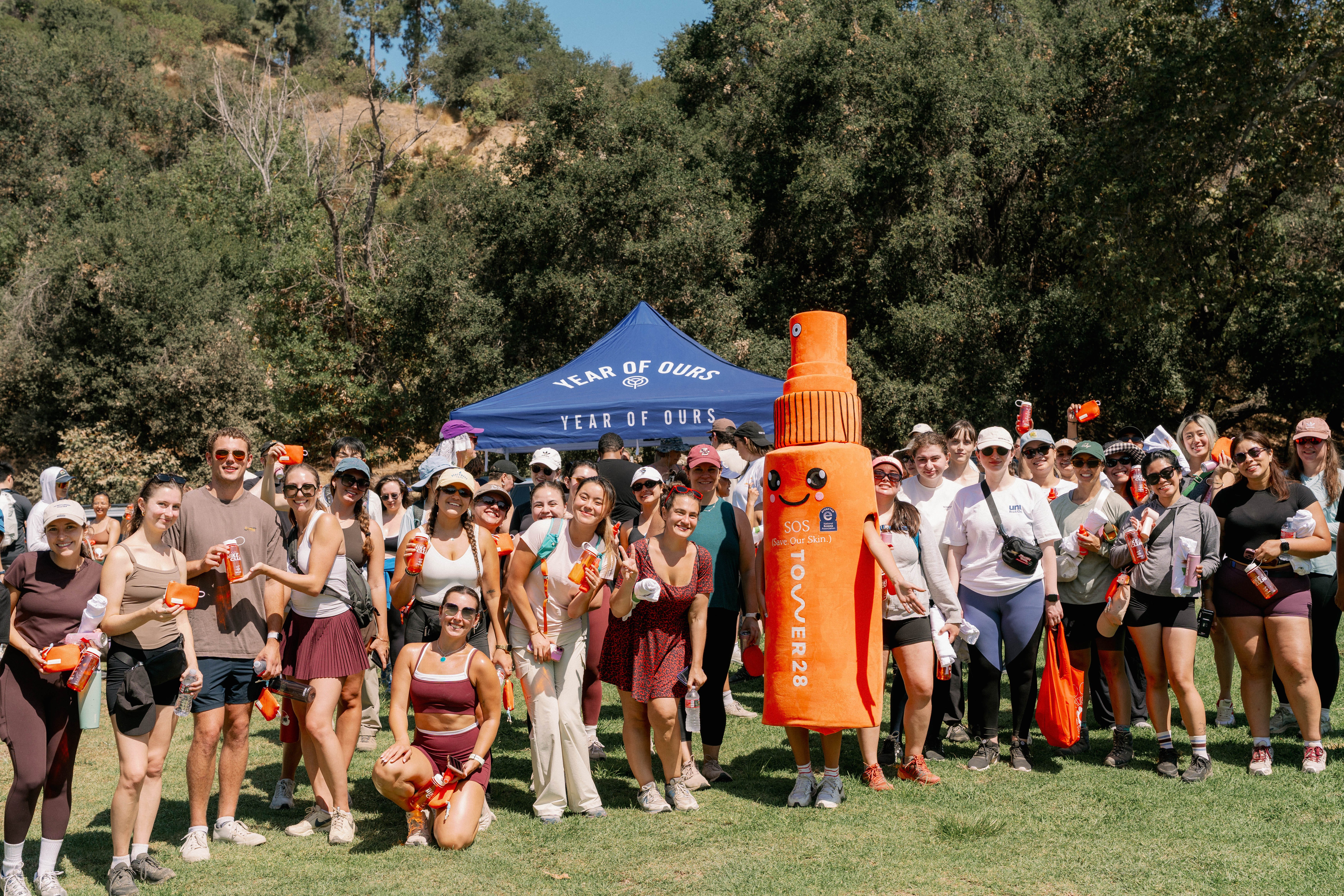
Of course, we have the guided hike, but a lot of times we have beverages. We’ve partnered most of them with a beauty company that will give away some goodies. At the first one we made shirts, so we had Year of Ours Hike Club shirts, and we gave those away at the first two hikes. We’ve done nalgene bottles that were like Hike Club branded. It’s exclusive merch for the Hike Club. The Tower 28 collab was definitely our biggest one. They brought out their mascot and their team, and they gave out a lot of stuff to the people.
For the first Hike Club we had 30 people, and then our last one was over 100. The RSVP list is usually hits 200 or 250. We never really know who’s going to show up. At the last Tennis Club for the summer we had 100 people come and there were over 200 RSVPs. It was free like the Hike Club events.”
RW: What have you learned in the few years doing Tennis Club and this first summer of Hike Club, and how are you applying it to future events?
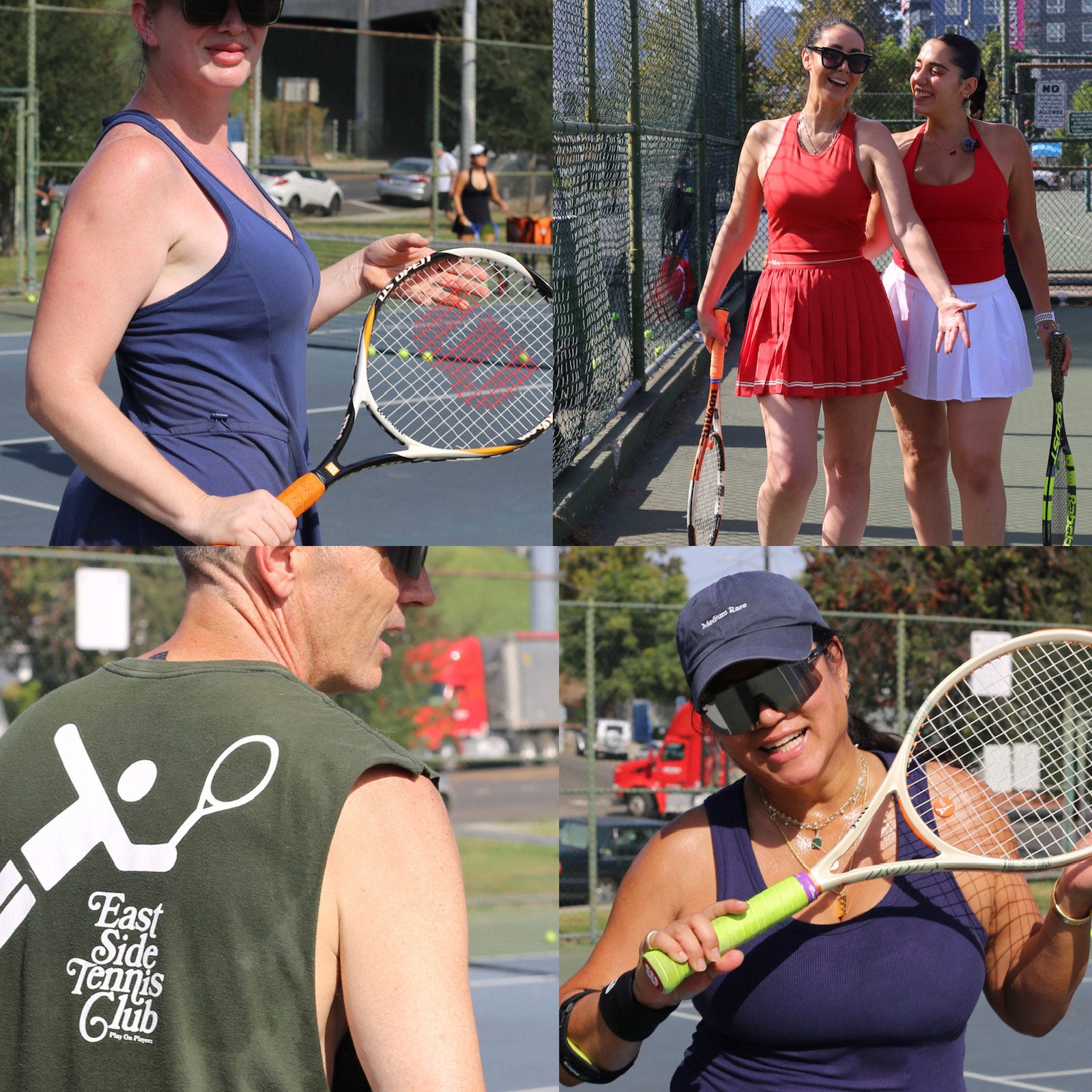
EH: “Tennis Club has been a bit of a passion project. We don’t make money from it, but I think it’s really cool to see people progress in their level of tennis. We’ve introduced a lot of people to tennis, and now they play on their own. It’s really rewarding because you’re actually teaching someone a skill or getting them access to something new they enjoy. And, I think a lot of adults are apprehensive to pick up a new sport.
With Hike Club, it’s just really cool to the range of people that come. We’ve had people bring their moms and their dads, their husbands, their dogs and their kids, and it’s just really nice. It’s so rewarding to bring an idea to life and have it evolve like this.
That’s why it’s so important to make Tennis Club free. I do want to make it more open and free, so it can be more accessible to people. If our goal is to get people into the sport in community, that’s what has to happen.”